
The Art of the Frame
You’ve found a piece of art that speaks to you. Maybe it’s a painting you commissioned, a photograph that captures a cherished memory, or a print that just makes you smile. Now comes the exciting part: figuring out how to frame it so it becomes part of the beautiful life you are creating.
Before we dive into materials or measurements, let’s talk about what actually matters. How do you want to experience your art? When you encounter it in your home, what do you want to feel?
That’s where every framing project should start. Feeling over form.
Take a moment to slow down and notice how the art already shows up in your space, to get in touch with that feeling. Considering a few simple questions can give you all the design clarity you need.
What's the artwork's personality?
Bold and modern pieces tend to love clean lines, floating or gallery wrap frames. More traditional or delicate pieces often feel right at home in wood and glass frames with thoughtful matting.
Where will it live?
Consider your room's style and what else lives on those walls. The goal is art that looks and feels like it was always meant to be there.
How do you want to feel?
Frames absolutely create mood. Minimalist metal frames feel crisp and contemporary. Natural wood brings warmth and comfort. Gallery wrap feels artistic and free-spirited. Use the intrinsic feeling of these framing methods to work with your art, creating harmony or deliberate contrast.
Is this piece precious?
For the artwork that really matters, valuable pieces or ones with sentimental worth, invest in the good stuff, archival materials, acid-free mats, UV-protective glass, and proper mounting techniques. These pieces deserve protection that keeps them beautiful for decades.
Once you have a sense of how you want the art to be experienced in your home, the framing options start to fall into place. The right frame does more than protect your artwork, it completes the piece, enhances its impact, and helps it live comfortably in your space. Here are a few framing styles worth considering.
A Statement All Its Own: Gallery Wrap
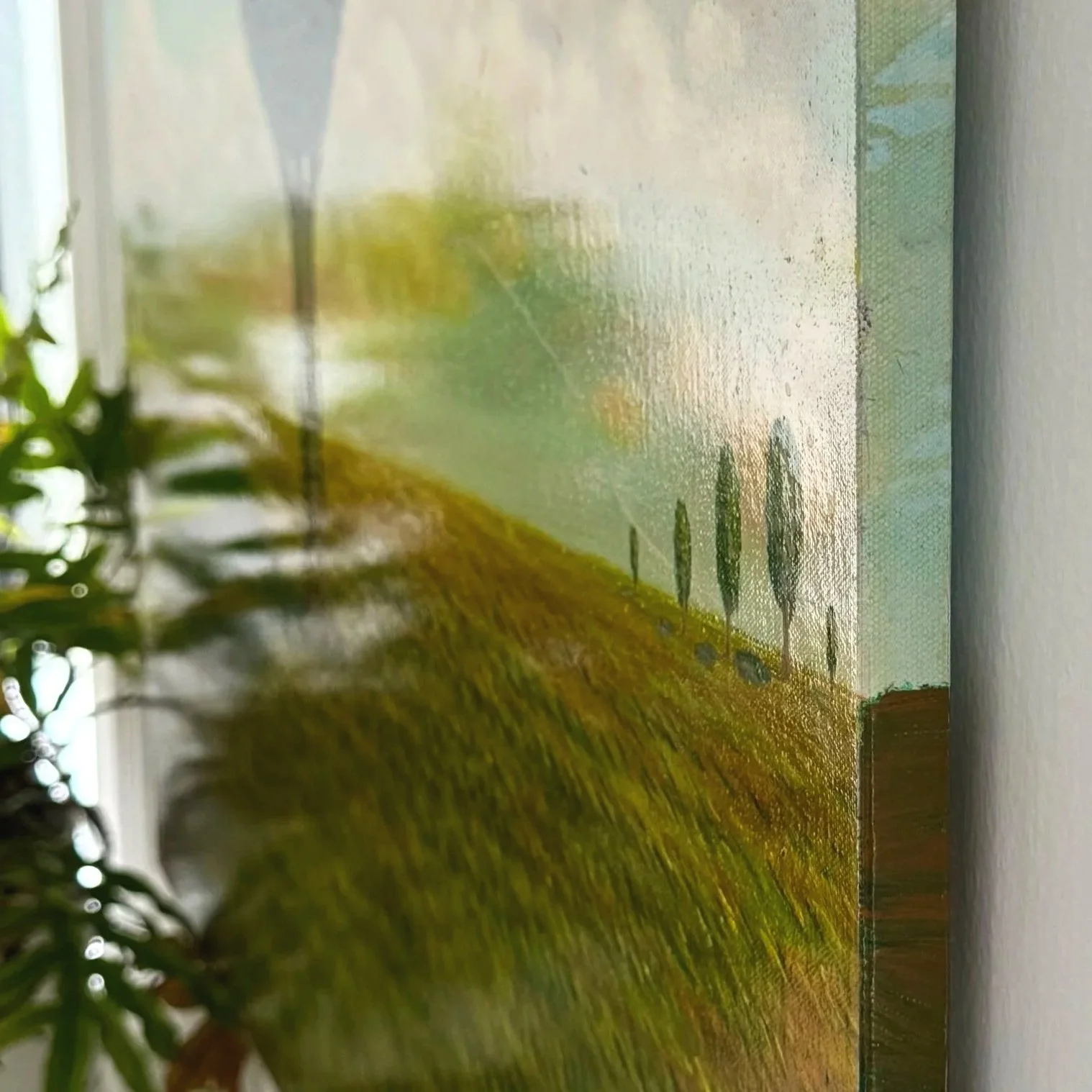
If you love the idea of your artwork making a bold, cinematic statement, gallery wrap is the one to pursue. This technique stretches the canvas around thick wooden bars, usually about 1.25 inches deep, with the image continuing around the sides. The canvas is stapled on the back, creating a clean, frameless look you can view from any angle.
The image doesn’t stop at the corners of the painting. It keeps going over the edge and around the sides. This approach works beautifully with large canvases and abstract or modern pieces, where you want the art itself to be front, center and on the sides.
Lightweight and low profile, these pieces practically float on the wall, giving the art dimension and presence, bringing that gallery feeling right into your home.
A Refined Edge: Museum Wrap
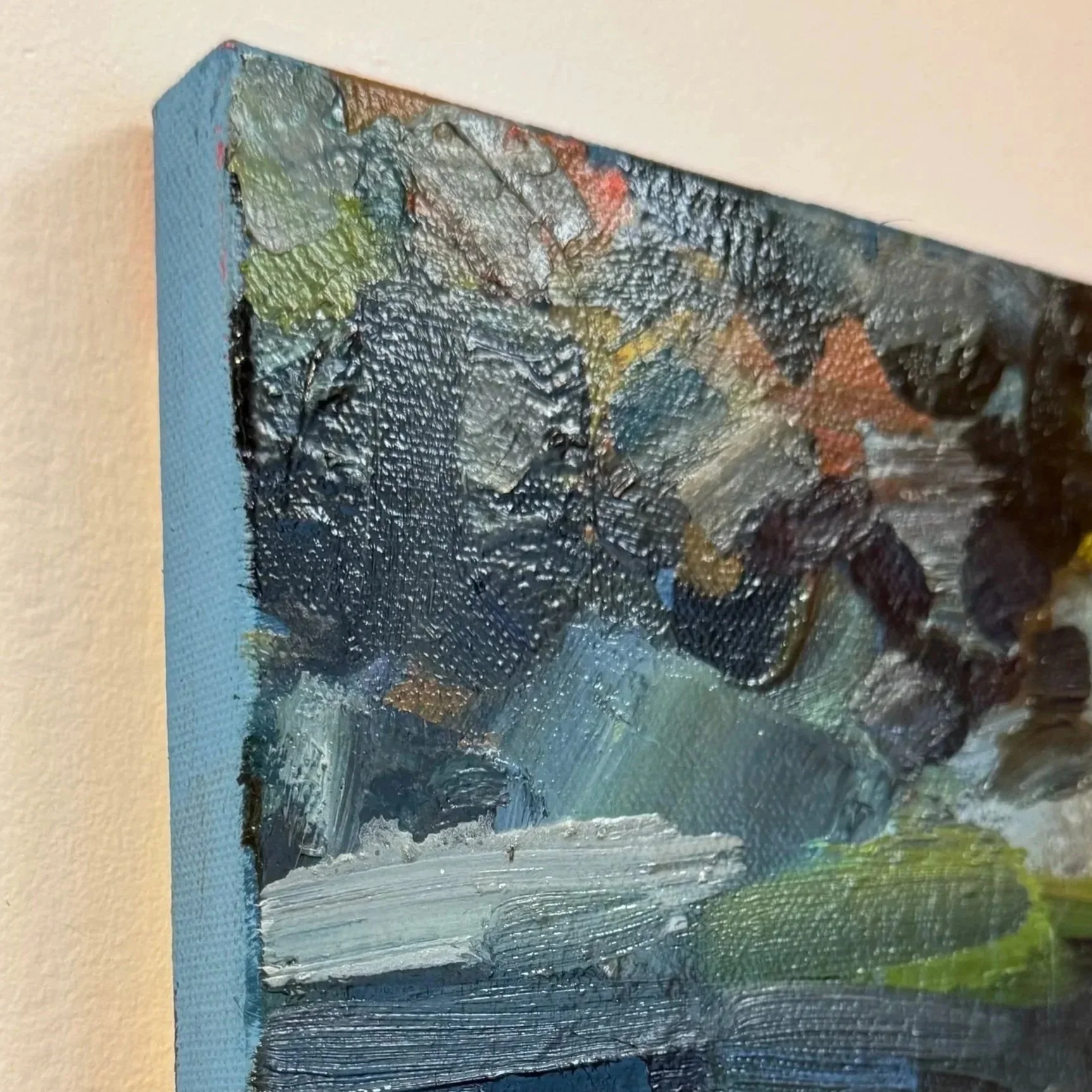
Museum wrap is similar to gallery wrap, with one subtle, but impactful difference. Instead of the painting continuing around the edges, the edges are painted in a single, complementary color. This gives the artwork a sense of completion, and feels calm and intentional.
Imagine a painting with bold black contours, the edges might be painted black to echo those lines, bringing cohesion to the entire piece. Or a landscape with deep blue tones might have navy-painted edges that tie everything together with a subtle contrast. Or maybe it’s a modern abstract that is painted neon at the edges for a dissonant juxtaposition. However you do it, the result keeps the artwork contemporary and unframed just with a slightly more composed feel.
Room to Breathe: Floating Wood Frame
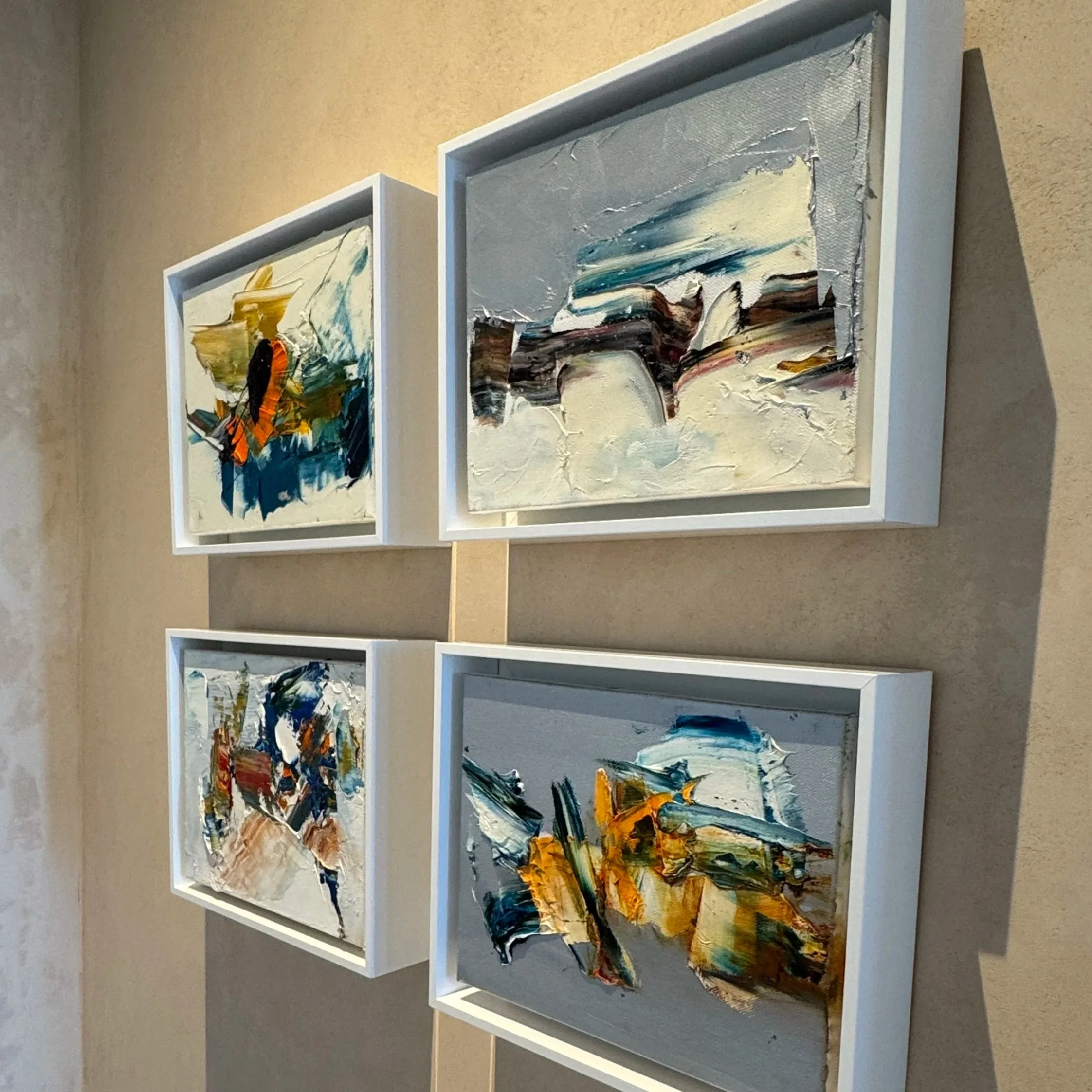
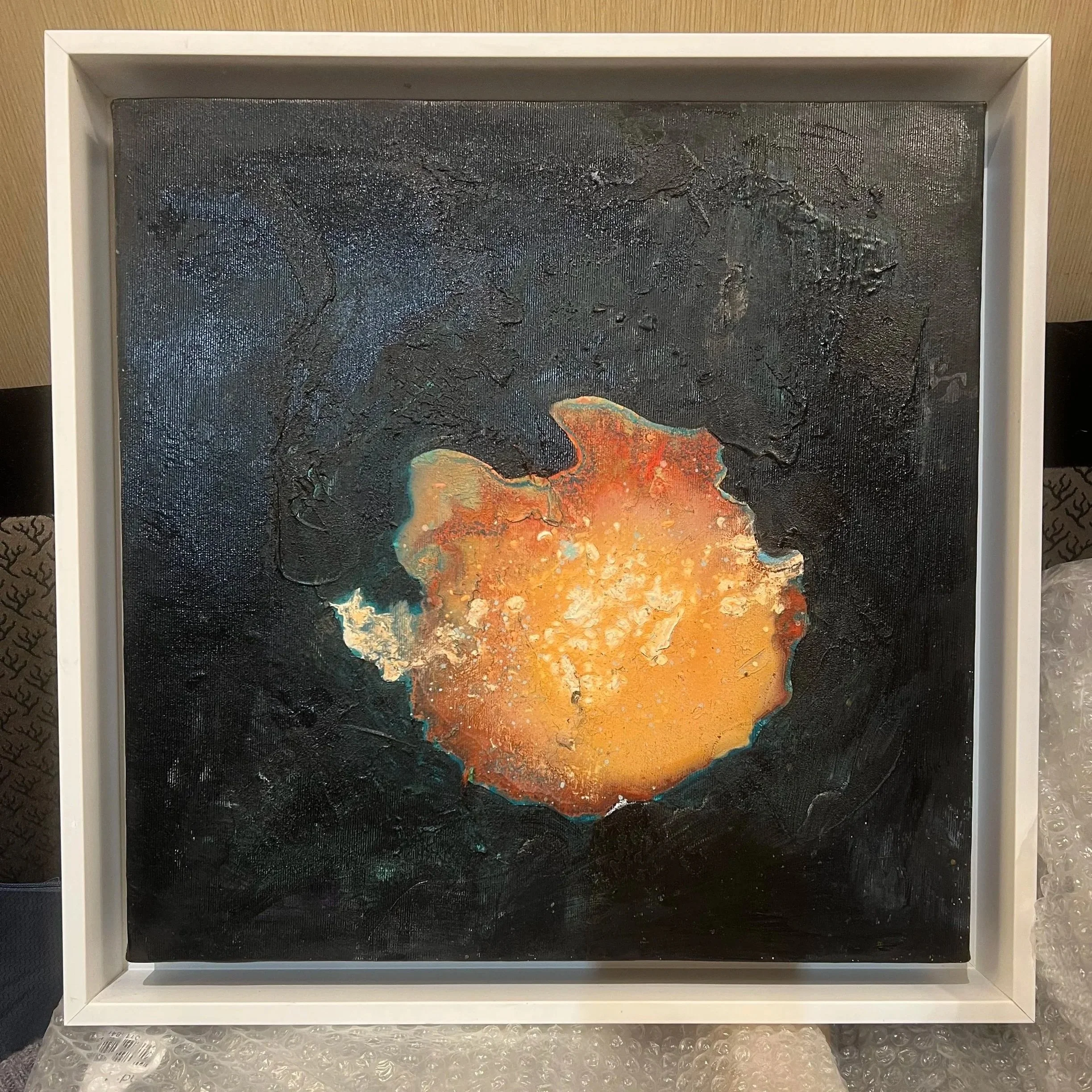
There's something magical about the floating frame. It creates the illusion that your artwork is suspended within the frame, hence the name. This adds a subtle sense of freedom to the piece.
Here’s how it works: your canvas is stretched over wooden bars, and unlike gallery or museum wrap, the edges don’t need to be perfectly finished. A custom wooden outer frame is built slightly larger than the artwork, leaving a narrow gap between it and the frame. That subtle space casts a soft shadow around the piece, which is what gives it that floating effect.
Floating frames are relatively new and have become incredibly popular, especially in galleries. They're contemporary, classy, and work beautifully with everything from bold abstract pieces to delicate watercolors. If you want your art to feel elevated and gallery-ready while keeping things modern, this is a wonderful option to consider.
Enduring Versatility: Framing Works on Paper
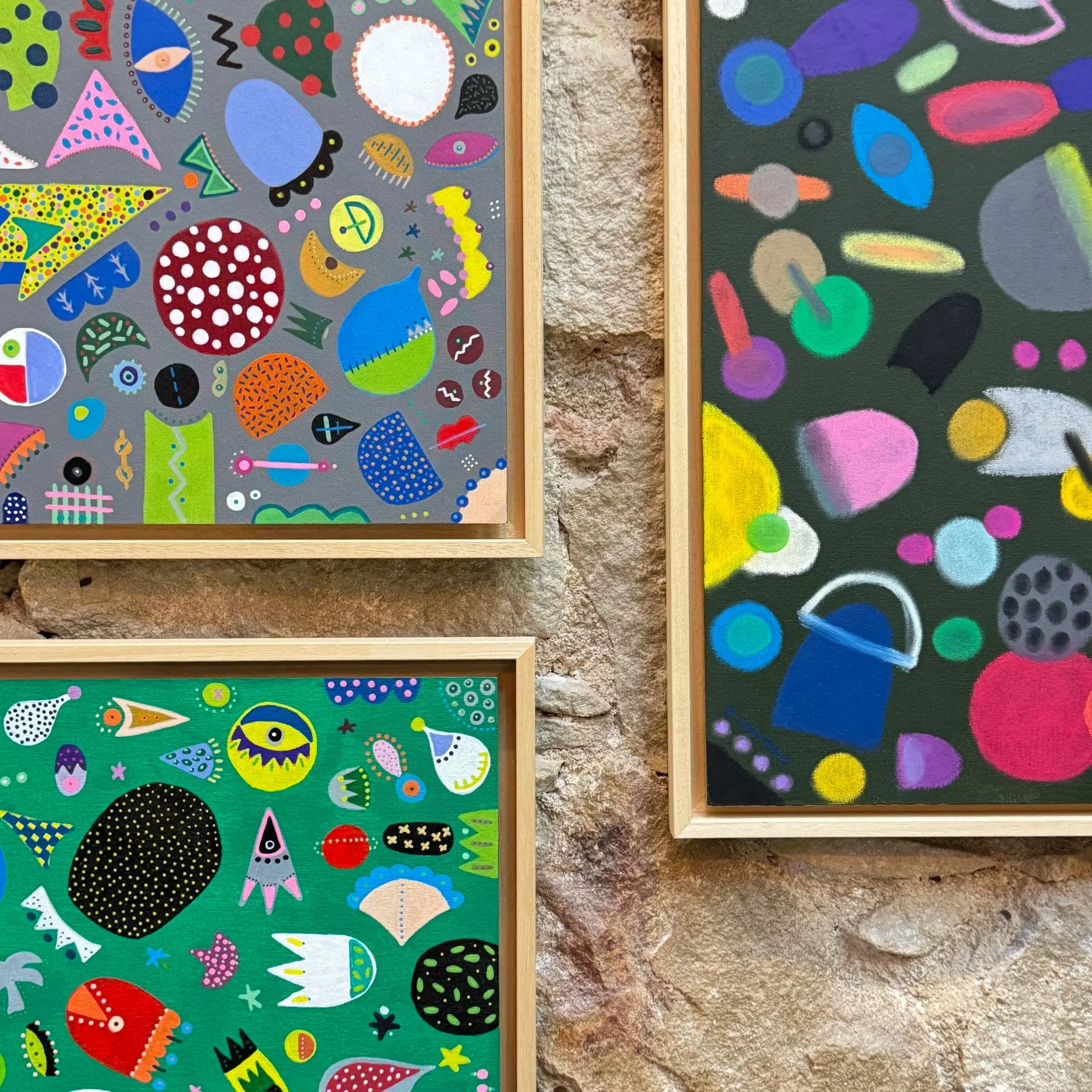
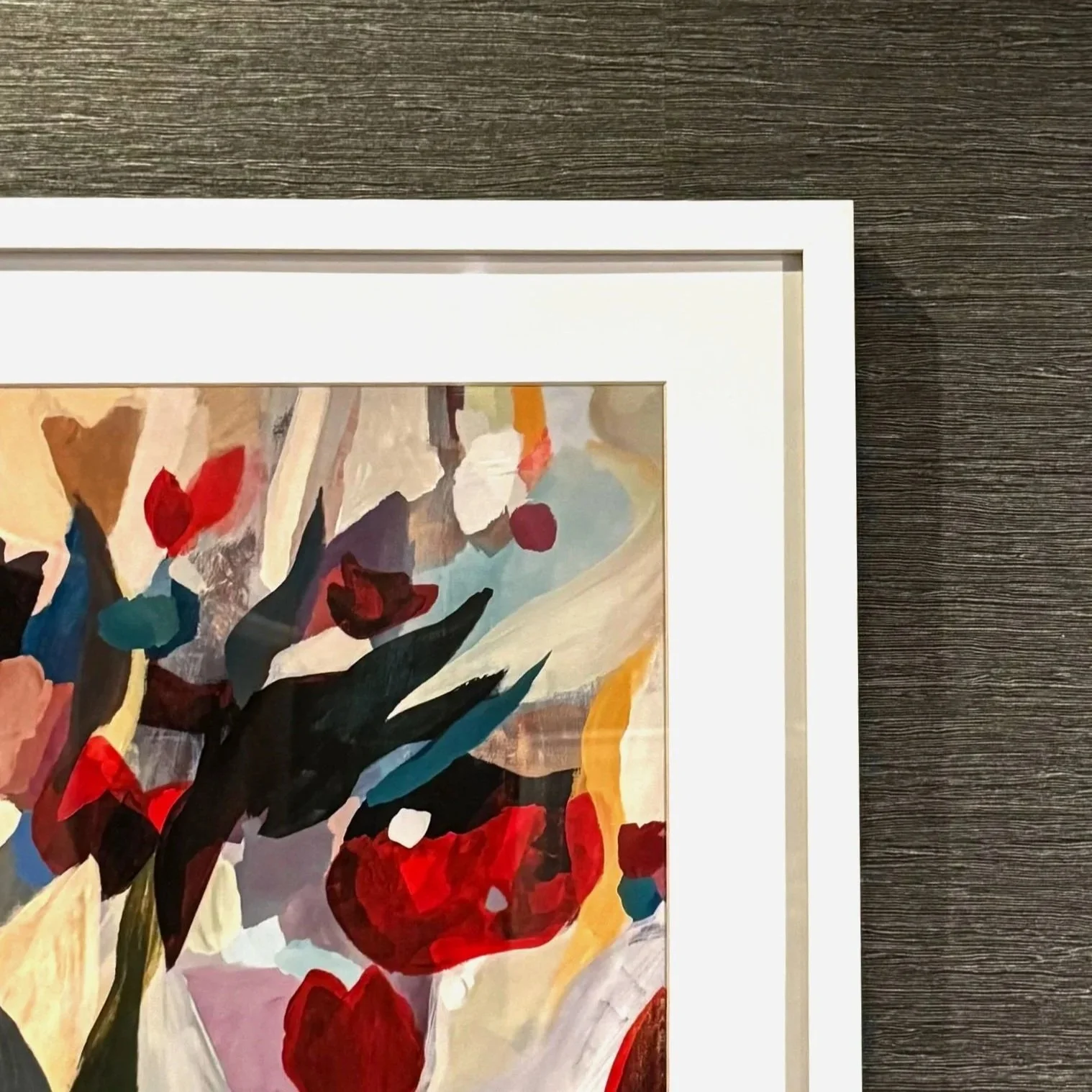
Works on paper tend to ask for clarity and structure. These are pieces, watercolors, prints, drawings, and acrylics, you want to feel at ease and protected, no matter where they hang. Metal and glass or wood and glass frames offer that kind of quiet reliability.
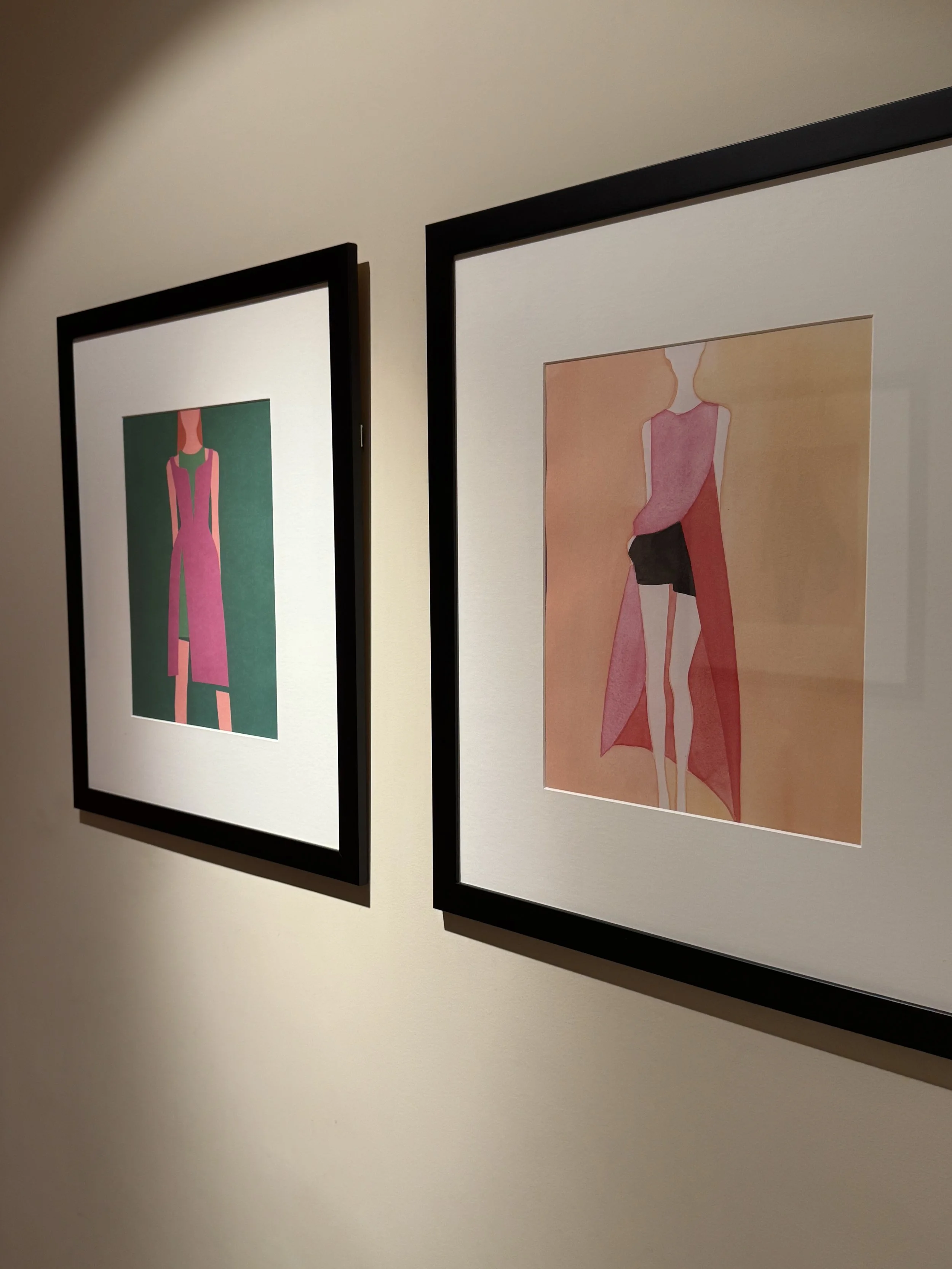
Metal and glass frames are slim and understated, typically made from aluminum or similar metals. They have a clean, contemporary look and keep the focus squarely on the artwork.
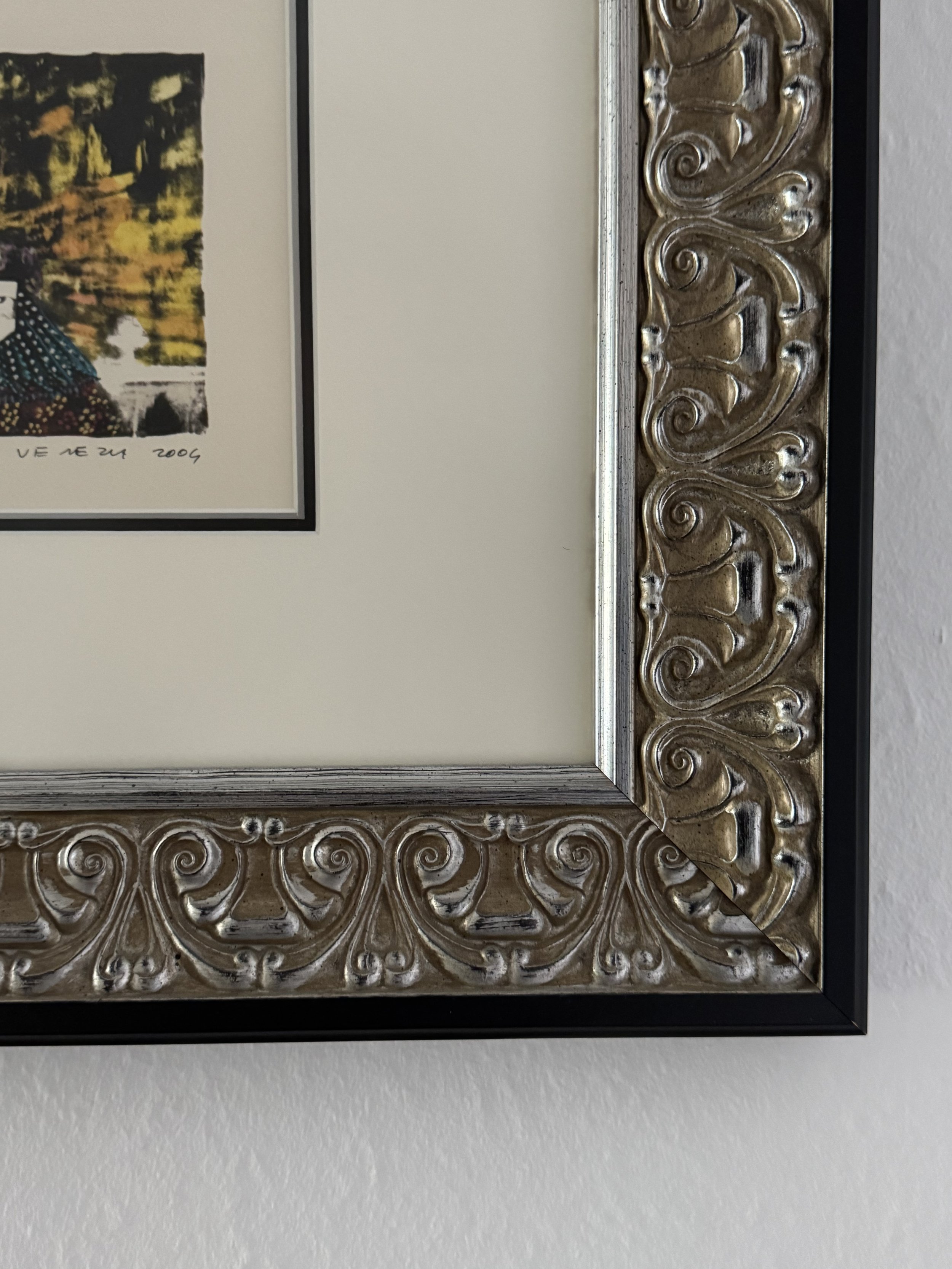
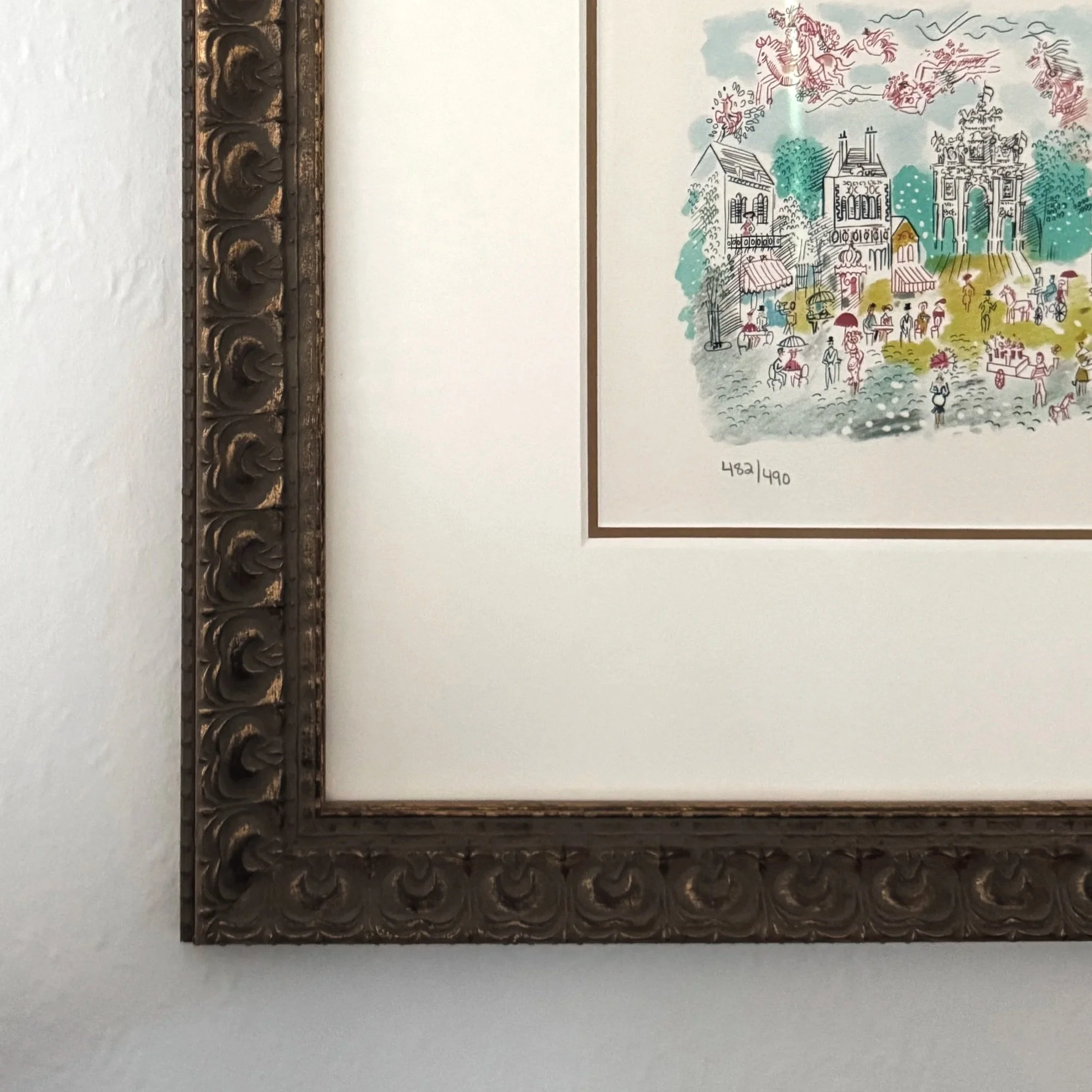
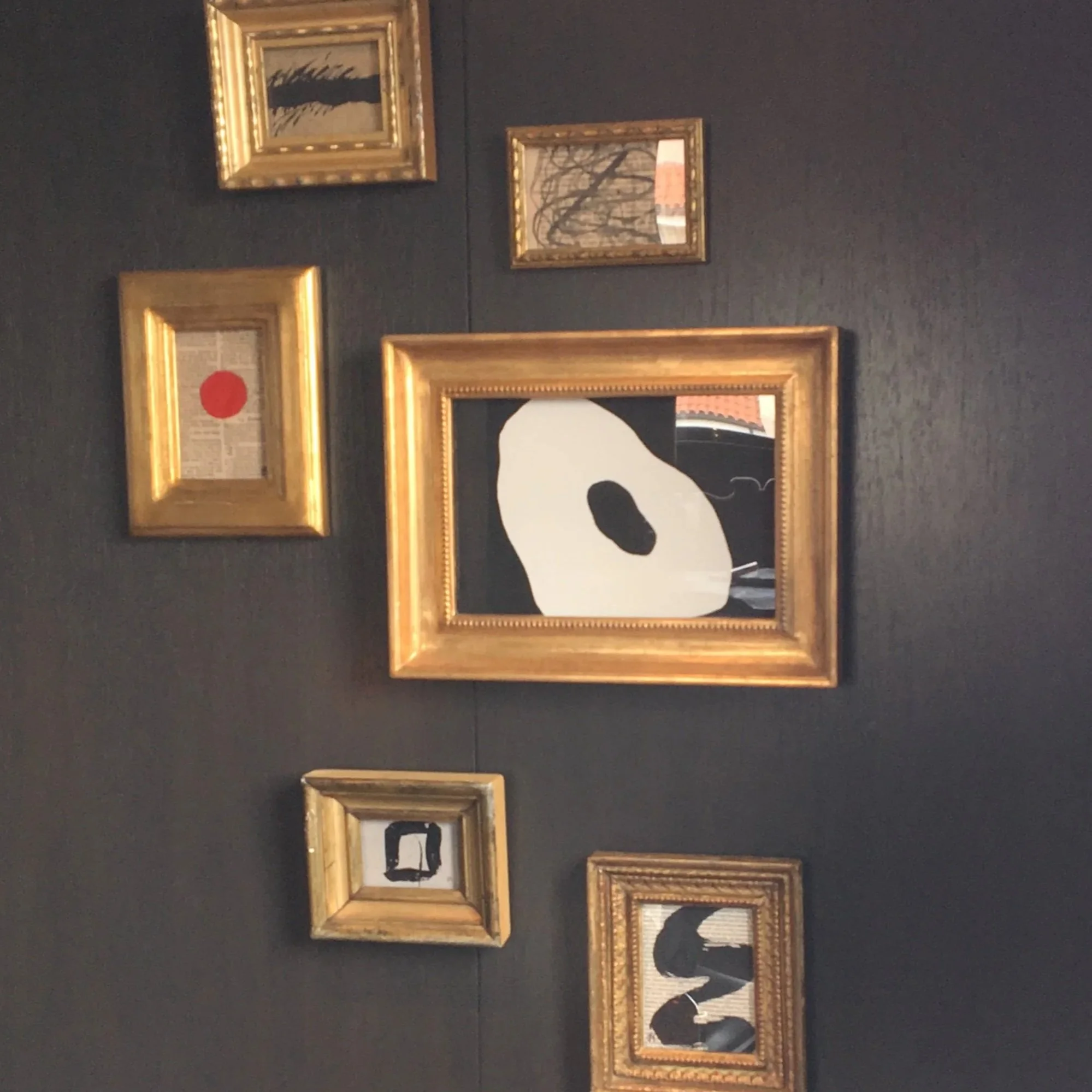
Wood and glass frames introduce a warmer note. Crafted from wood or MDF (medium-density fiberboard), they add material texture and softness, so they feel at home in more traditional or layered spaces. These can be simple frames, with minimal detail, or elaborate frames with texture.
Either way, the structure is similar. The frame forms the outer edge, while the artwork is mounted on archival, acid-free materials. Adding matting creates that frame-within-a-frame effect, drawing your eye towards the artwork. This could be a single mat for simplicity, or double mats for added depth and drama.
To protect works on paper, you’ll also choose a clear cover. Depending on size and placement, this is typically acrylic or UV-protected glass. Acrylic is lighter and less fragile, which makes it practical for larger pieces.
The Mic Drop: HD Metal with Recessed Back-Frame
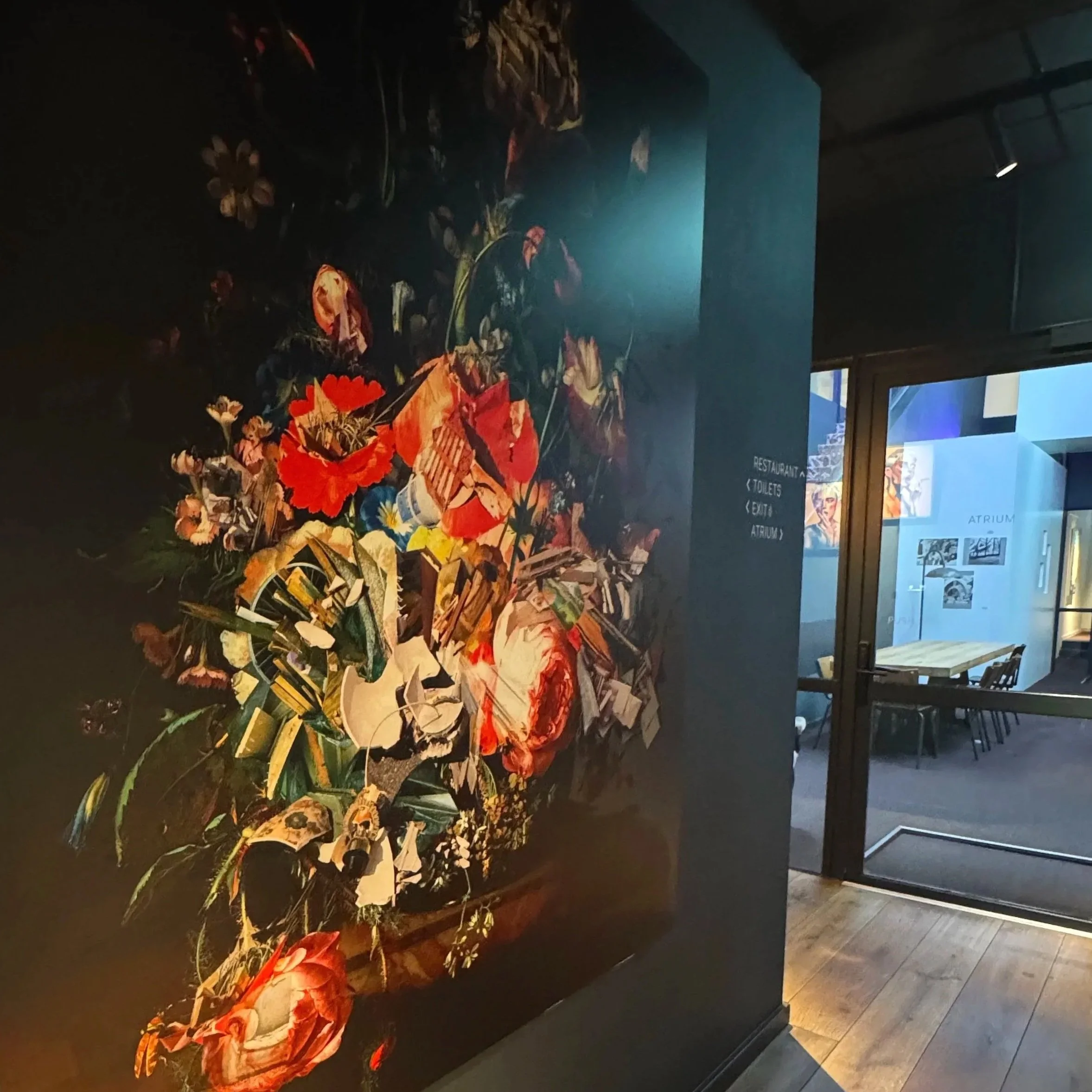
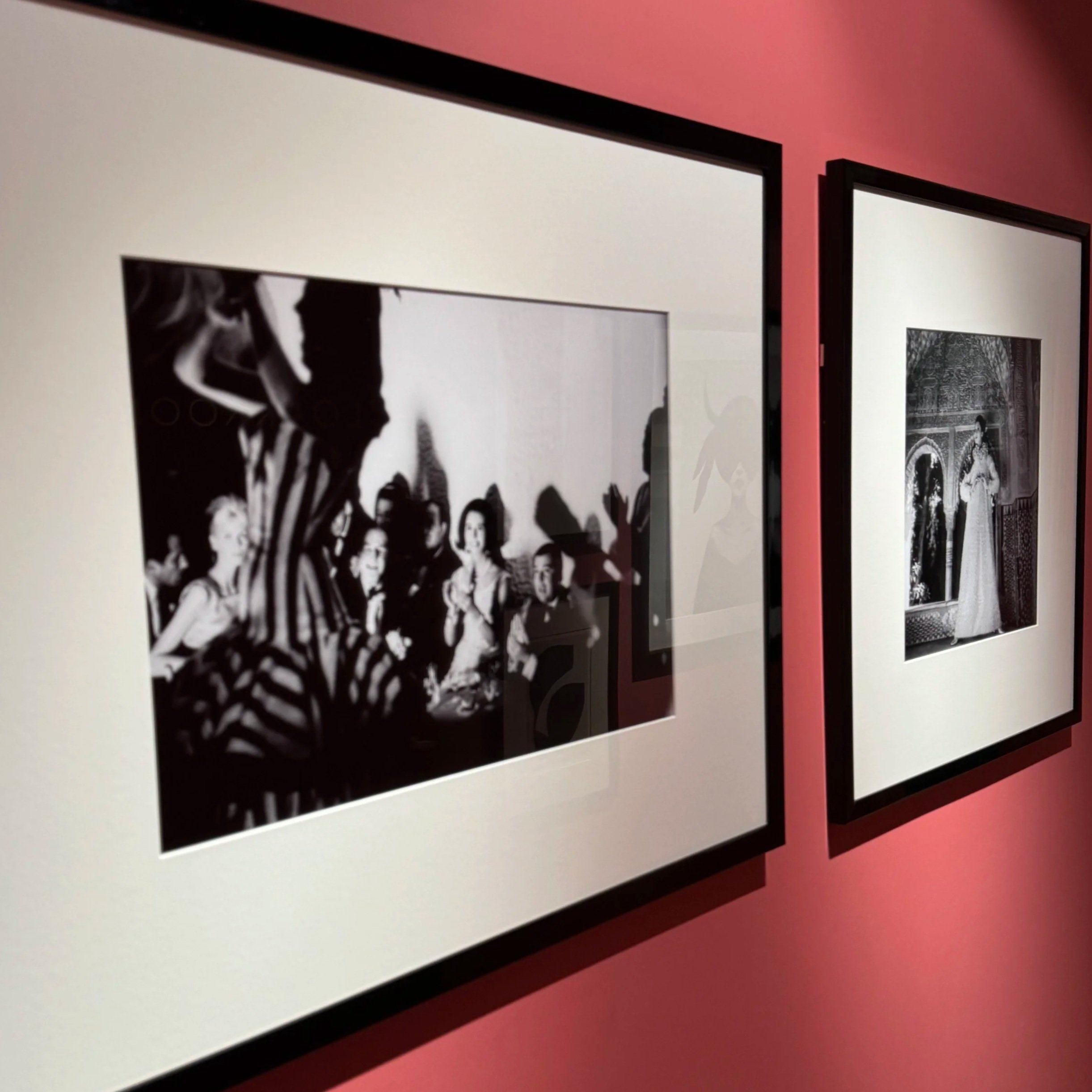
Some images ask to be experienced at full volume. Crisp, luminous, and impossible to ignore. When that’s the feeling you’re after, HD Metal Prints with recessed back-frames deliver.
Here’s the technical stuff: HD Metal Prints are created by infusing dyes directly into aluminum. It’s actually more of a printing process than a traditional framing option. The process intensifies color and sharpness, giving images a depth and vibrancy that feels almost lit from within. The material itself is lightweight, durable and doesn’t use any glass.
The recessed back-frame keeps the focus exactly where it belongs. Instead of a frame surrounding the artwork, the frame attaches to the back. Once the artwork is hung, the piece appears to float on the wall, allowing the image to command attention without interruption.
This frameless look is perfect for contemporary spaces, modern photography, vibrant abstract pieces, really any artwork where you want the image itself to be the whole show. The metal surface adds a sophisticated, gallery feel that works beautifully in both private homes and public spaces. Plus, the durability means you don’t have to worry about glass breaking or artwork fading behind UV-protective glazing. The metal itself is built to last.
Making It Yours
There’s no wrong choice when it comes to framing your art. The “perfect” frame isn’t the one that follows every rule. It’s the one that makes you smile when you walk past it each morning.
When a frame truly fits, the artwork reaches its full potential. You pause a little longer. You notice details you hadn’t before. Small moments of beauty and joy begin to greet you as you move through your space. Over time, those little choices add up to shape a home that feels personal, comfortable, and entirely your own.
If this process feels overwhelming, you don’t have to figure it out alone. A trusted interior designer or professional framer can translate what you’re imagining into something real, handling the details so you can focus on the feeling you want to create.
Your art already has a story to tell. The frame you choose is simply the setting that lets that story shine. When everything comes together, the result is artwork that feels considered, personal, and unmistakably yours.