
Art: Design Begins With Your Collection
Art in interior design: it can absolutely make or break a space. And yet it's so often the last decision, the thing that gets hung once the sofa's ordered and the paint's dry, like an afterthought instead of a plan.
Art isn't decoration you add at the end. It's one of the first questions we ask.
Start with What You Own
Before we sketch a floor plan or choose a paint color, we want to see what you own. You expect it for your furniture, and your artwork is just as important. We catalog your collection, noting sizes, styles, and which pieces matter most to you. Then we strategically edit. Yes, you heard that right. Edit. Pieces of your collection can move in and out of your home, allowing each one to tell a part of your story. That story lives in the details.
Your travels. Your passions. The pieces you've collected over a lifetime, and the ones you inherited from people who shaped you.
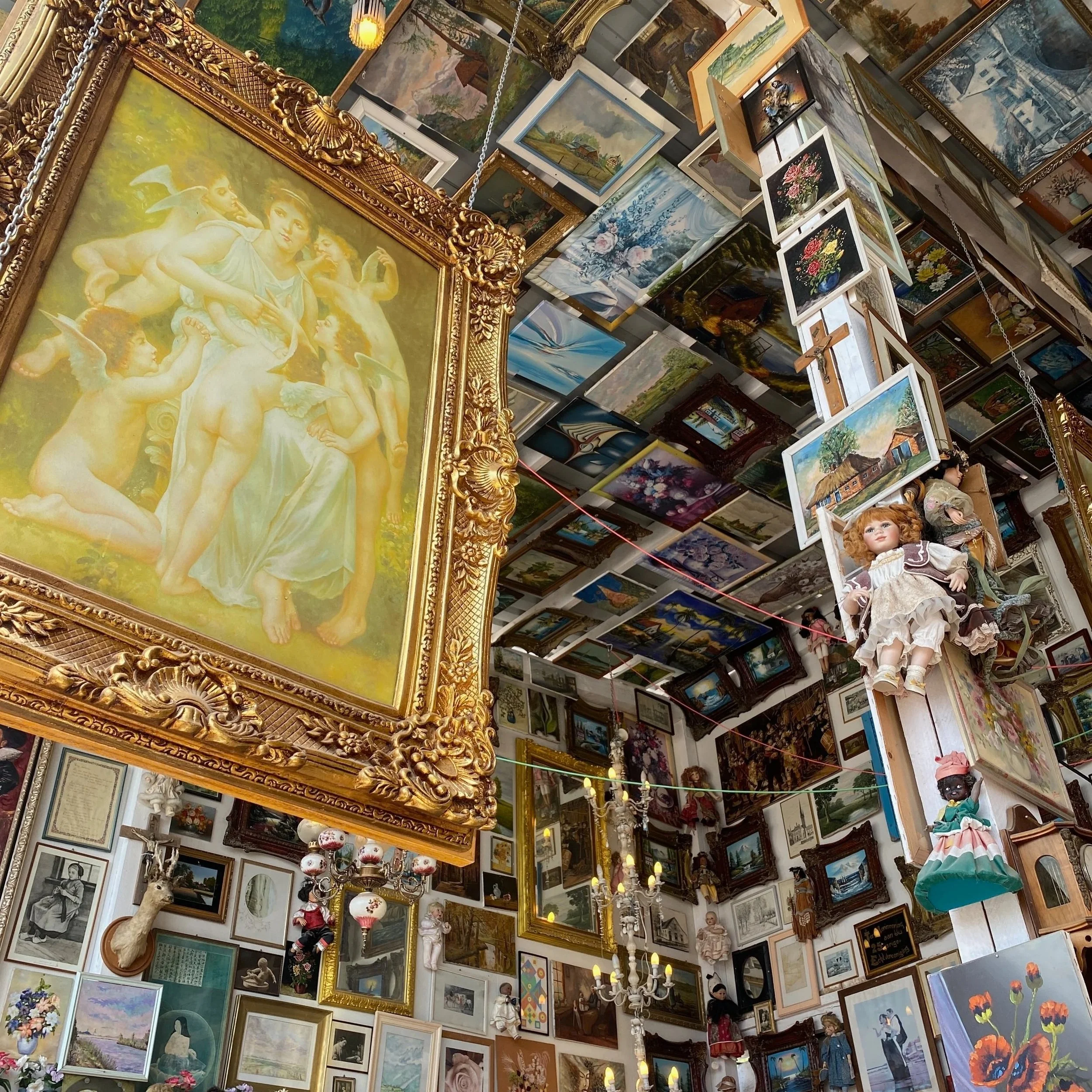
Edit, edit, edit!
Getting to Know Your Art
Early in the process, while we're creating mood boards and exploring possibilities, we're already asking questions about your art:
What's your design style? Are you a minimalist who wants one stunning piece to command attention in a room? Or do you love a layered, maximalist approach where the walls themselves become a conversation?
Do you have that one special piece (you know the one, you saw it in your mind just now), that demands to be the center of attention? Or maybe you have a lifetime of art still hiding in dusty closets, waiting for an opportunity to shine?
These aren't just casual questions. The answers determine scale, placement, and how the entire space comes together around your collection.
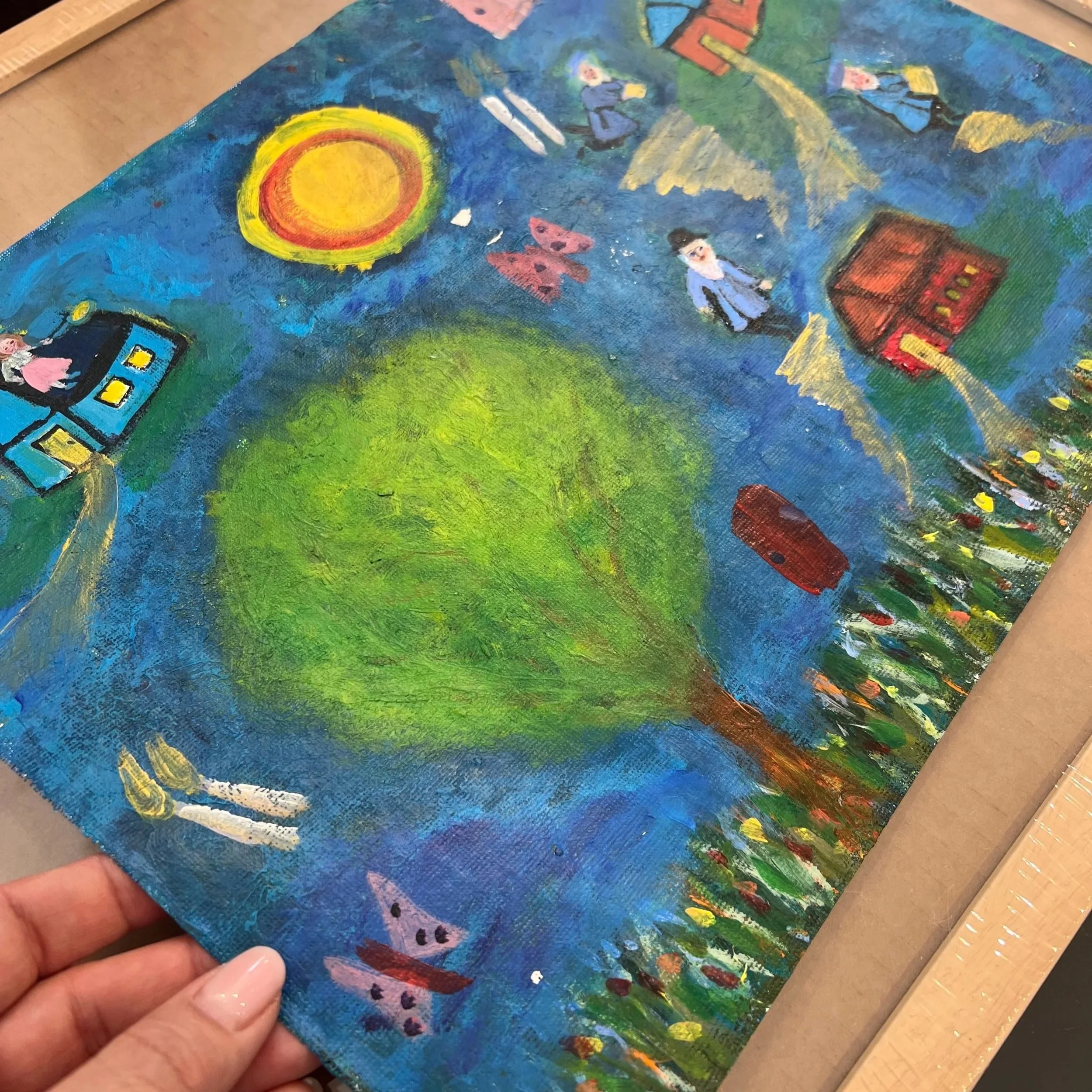
Your Art’s Happy Life (and Yours) Begins With Early Planning
Placing artwork isn't just about finding an empty wall and hammering in a nail. It's about creating focal points, adding depth, guiding the eye from one moment to the next. It's about making sure your art complements your architectural elements and existing decor so everything feels like it’s right where it belongs.
When we plan early, artwork becomes part of the design, not an afterthought.
Here's what happens when we don't plan ahead: We finish the space plan, place the furniture, and then realize there isn’t adequate wall space for your oversized painting. Or the lighting isn’t right for your favorite sculpture. Or worse, furniture blocks the perfect viewing angle. Trust me, scrambling to fit art into a finished space is nobody's idea of a good time.
This is where elevations come in. We're not just thinking about the floor plan, we’re also thinking vertically. Will a sculpture need special lighting? Then we call in an electrician early. Is it a painting with intricate details? We'll consider how shadows will fall and which elements deserve to be illuminated.
And we can’t forget the angles and reflections. How a piece of art will appear in mirrors and windows and at different times of the day as the light moves through a space. It’s all a considered thoughtful approach to how the art will live in your home.
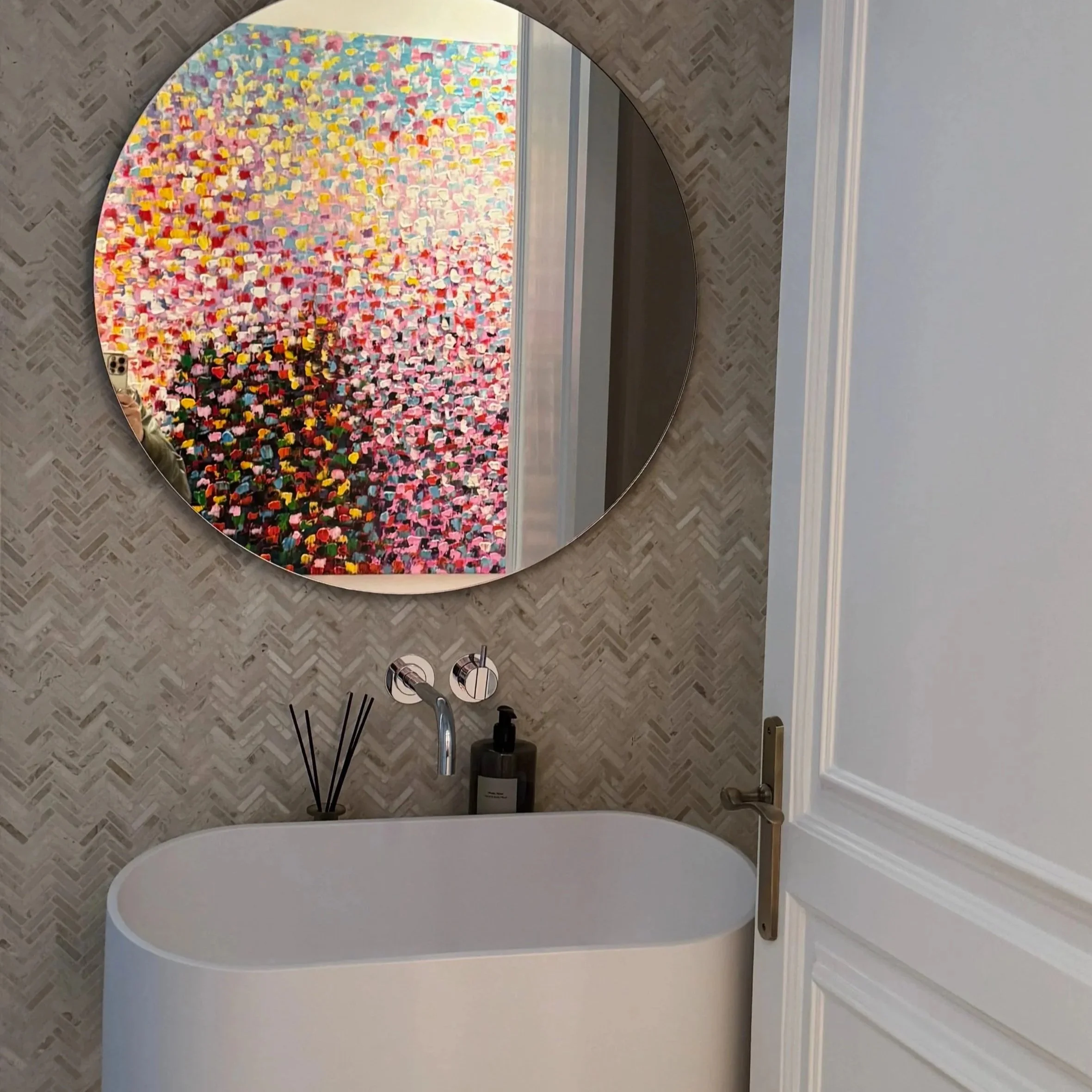
A Little S.P.F. for Your A.R.T.
And while we're on the subject of light, let's talk about preservation. Just like we slather on sunscreen to keep ourselves looking young and gorgeous, your art needs a little UV protection too.
Works on paper are particularly sensitive. That vintage print or watercolor you love? Direct sunlight is not its friend. The same goes for photographs and delicate textiles. We've all seen what happens when a beloved piece fades over time, and it's heartbreaking.
This is why placement matters beyond aesthetics. When we're planning your space, we're thinking about which walls get harsh afternoon sun and where UV-filtering glass might be necessary. Spoiler alert, it’s almost always necessary. With the protection in mind, we position pieces out of the light and where they can be enjoyed.
Because what's the point of owning beautiful art if it slowly fades into oblivion? Your collection deserves more than a fleeting moment in the sun.
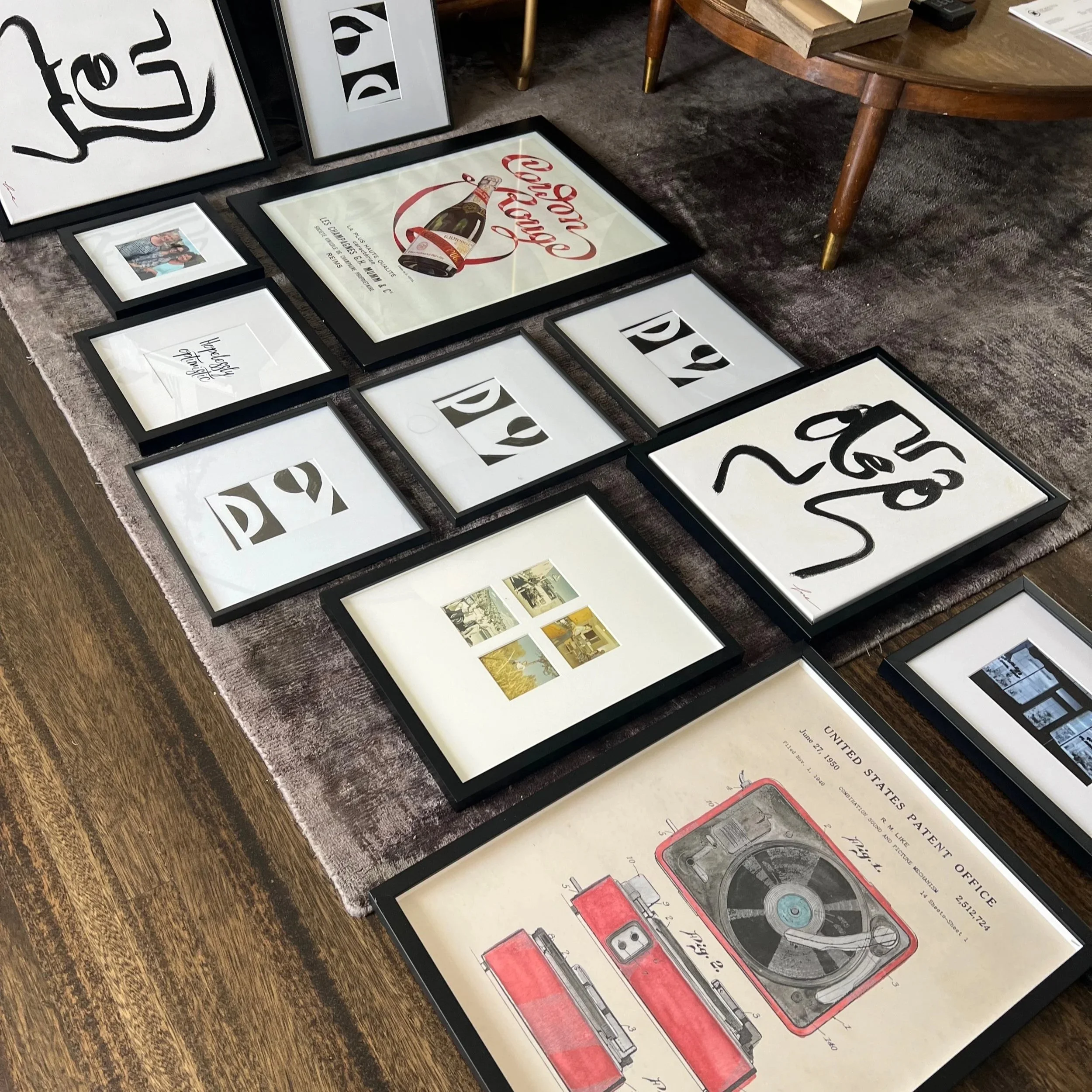
Shhh…the Art is Talking
The magic happens when we start thinking about how your collection works together. That painting you brought back from Rome might set the tone for an entire room. The vintage poster your grandmother left you? It could be in conversation with something contemporary you just discovered at a gallery.
We're looking for those common threads that run through your collection that maybe you haven't even noticed yet. The colors that repeat. The themes that emerge. The way one piece leads you naturally to the next.
Because here's what we've learned: when art is placed with intention, it doesn't just accessorize, it creates a rhythm through your home. Each room becomes part of something larger, connected by the things that matter to you.

The Space Your Story Deserves
Our job is to make sure your home tells a cohesive story. That when someone walks through your home, they're not just seeing beautiful things on the walls, they’re learning something about you..
We know what you might be thinking. "This sounds like a lot of planning just to hang some pictures.”
But that painting from your trip to Italy, the sculpture you inherited from your grandmother, the piece you impulse bought at that gallery opening, they all deserve more than a random nail in a random wall.
If you're reading this and thinking about pieces collecting dust in your closet, or that work you bought years ago that's still leaning against a wall… somewhere (you’ll have to look for it in the garage this weekend), we should talk.
Your collection has a story to tell. Our job is to make sure it gets told.
Ready to learn what your art is saying? Drop us a line.